World Cup 2026 Sleeve Patches: The Complete Guide (Right Sleeve, Left Sleeve & Every Round)
By Patch FC Editorial Team · Last updated 2026-06-25 · Sources: FIFA, Footy Headlines, nss-sports
If you've been staring at a 2026 World Cup jersey wondering why one sleeve has a glossy "26" emblem and the other has a patch you've never seen before, you're in the right place. This is the definitive guide to both sleeves: what each patch means, why some teams wear gold and others don't, and how the left-sleeve patch changes as the tournament moves from the group stage all the way to the final.
The 2026 World Cup is the first to feature 48 teams, the first hosted across three countries (USA, Canada, and Mexico), and the first with this exact two-sleeve patch system. There's a lot of detail packed into those two little badges, and most of it isn't explained anywhere clearly. Let's fix that.
The Two-Sleeve System, Explained
Every match-worn shirt at the 2026 World Cup carries two patches, one on each sleeve. They do completely different jobs.
- Right sleeve — the tournament emblem (the "26" badge). This is fixed. A team wears the same right-sleeve badge in every match they play, from their opening group game to the final. It identifies the shirt as a 2026 World Cup shirt and signals the team's pedigree.
- Left sleeve — the round patch (the "cause" badge). This one rotates. It changes depending on the stage of the tournament the match belongs to, and each version carries a social campaign message. A shirt worn in the Round of 16 has a different left-sleeve patch than the same team's shirt from a group game.
So when you collect or recreate a specific match, you need to get both sleeves right. The right sleeve tells you who (and how decorated they are); the left sleeve tells you when (which stage). Get one wrong and the kit is no longer accurate to the moment.
That's the whole framework. Everything below is detail on each side.
Right Sleeve: The Tournament Emblem and the Gold Rule
The right-sleeve badge is built around the 2026 tournament mark — the stylized "26." It comes in four colorways, and this is where most people get confused, so let's be precise about what drives the differences.
The gold version is reserved for former champions
There is a gold version of the tournament emblem, and it is not available to every team. It is worn only by nations that have previously won the World Cup and that qualified for 2026. In this tournament, that's seven teams:
- Brazil
- Germany
- Argentina
- France
- England
- Spain
- Uruguay
If a team has lifted the trophy before and is in the field, they get the gold badge. It's a visual marker of champion status — a small flex stitched onto the sleeve.
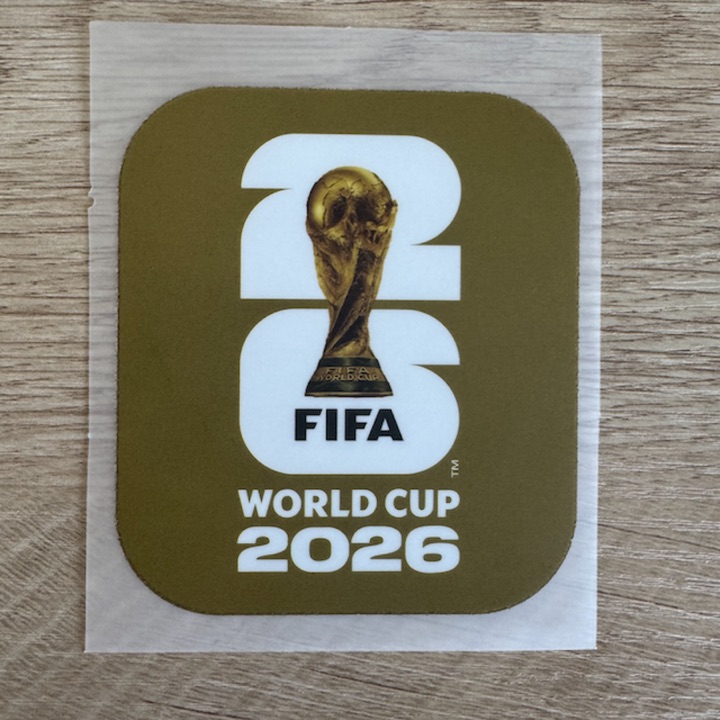
One important note: Italy has won the World Cup before, but did not qualify for 2026. So you will not see an Italian gold badge in this tournament. A nation has to both be a former champion and be playing in 2026 to wear gold. No qualification, no gold, regardless of history.
Everyone else wears black or white
The other 41 nations wear the standard version of the emblem, which comes in black or white. These are not lesser badges — they're simply the non-champion version of the same tournament mark.
Why a team might wear black on one kit and white on another
Here's the part that trips people up. Within the standard family, the choice between the black version and the white version is purely about kit contrast, not status. The rule is simple:
- A light badge goes on a dark shirt.
- A dark badge goes on a light shirt.
That's why the same team can wear the white emblem on its dark home shirt and the black emblem on its light away shirt. Nothing has changed about the team — the badge color just flips to stay legible against the fabric.
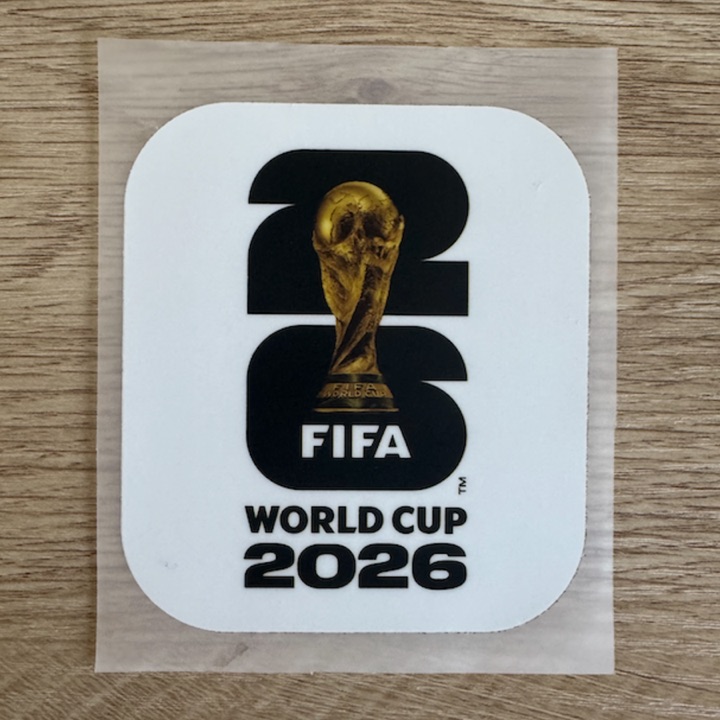
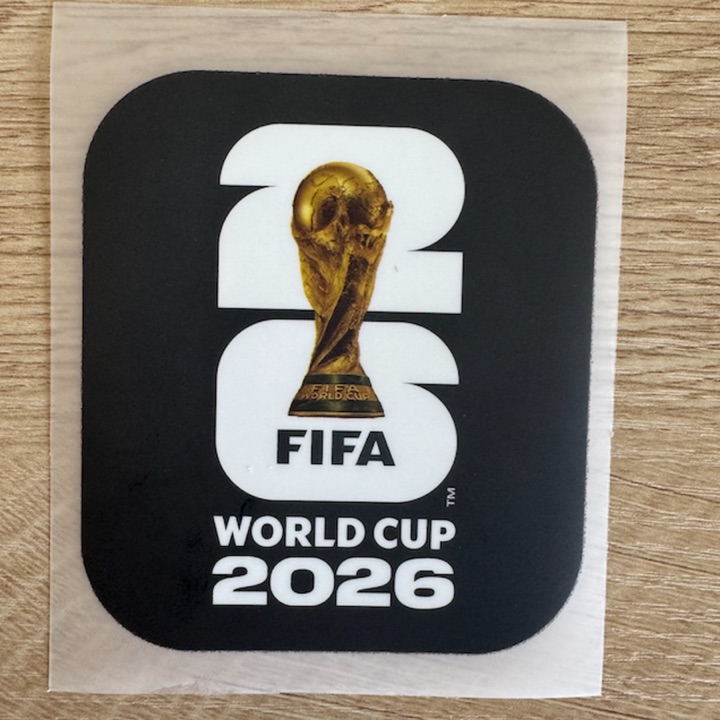
The critical thing to understand: contrast never moves a team between gold and standard. A former champion wears gold on both its home and away kits (with the gold treatment adjusted for the fabric); a non-champion never gets bumped up to gold just because of a color swap. Gold is about history. Black versus white is about readability. Keep those two ideas separate and the right sleeve makes complete sense.
Want the full breakdown of who wears what, plus how the gold treatment is handled across home and away kits? See our dedicated right-sleeve guide.
Left Sleeve: The Rotating Round Patch
Now the fun side. The left sleeve carries a patch that changes by stage, and each version is tied to one of FIFA's social campaign themes. As a team advances, the patch on its left sleeve is swapped for the next one. This is what makes a "Road to the Final" set so collectible — it tells the story of a deep tournament run, one patch at a time.
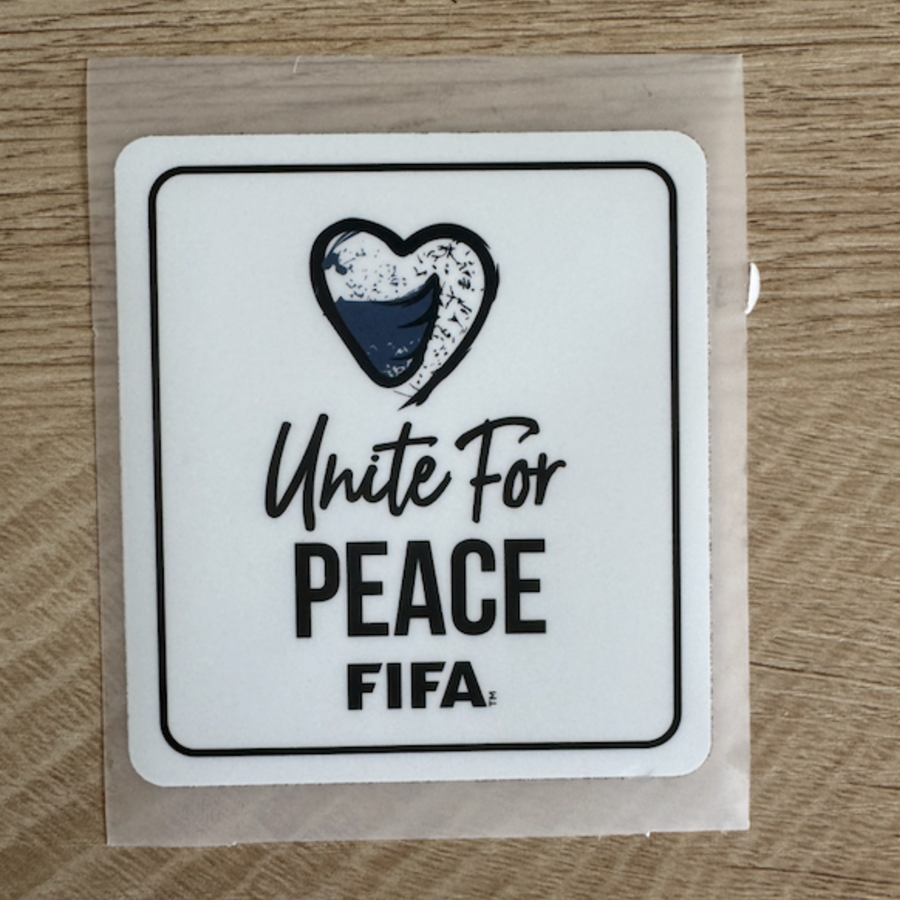
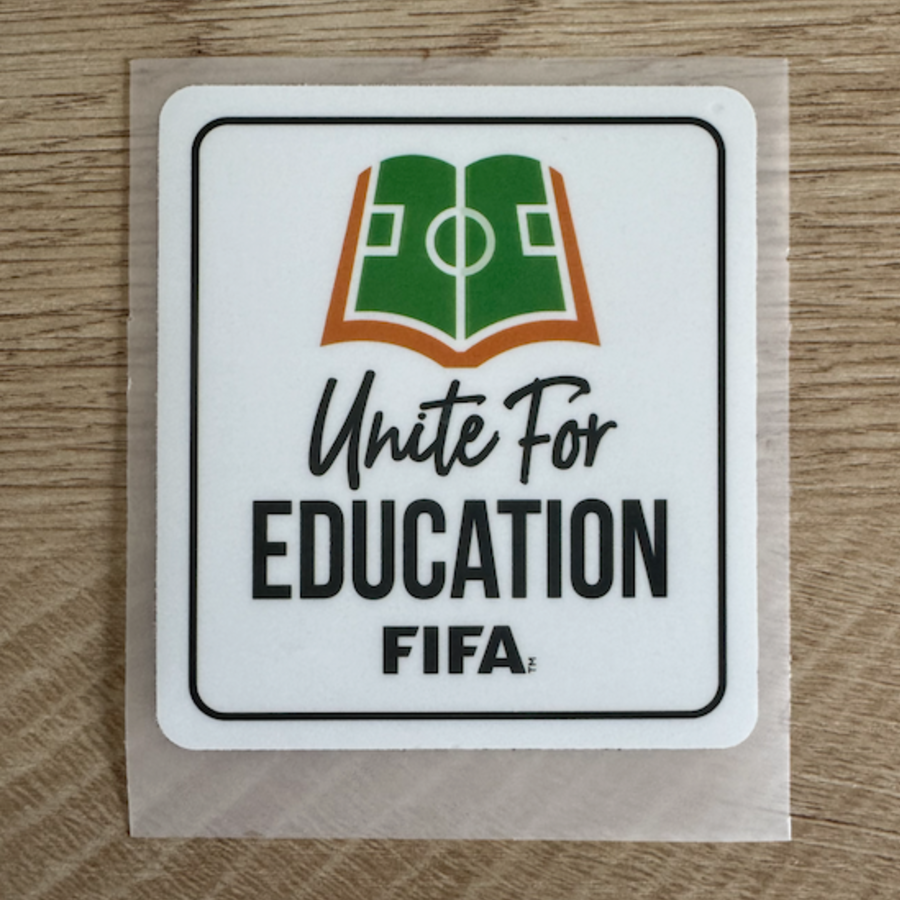
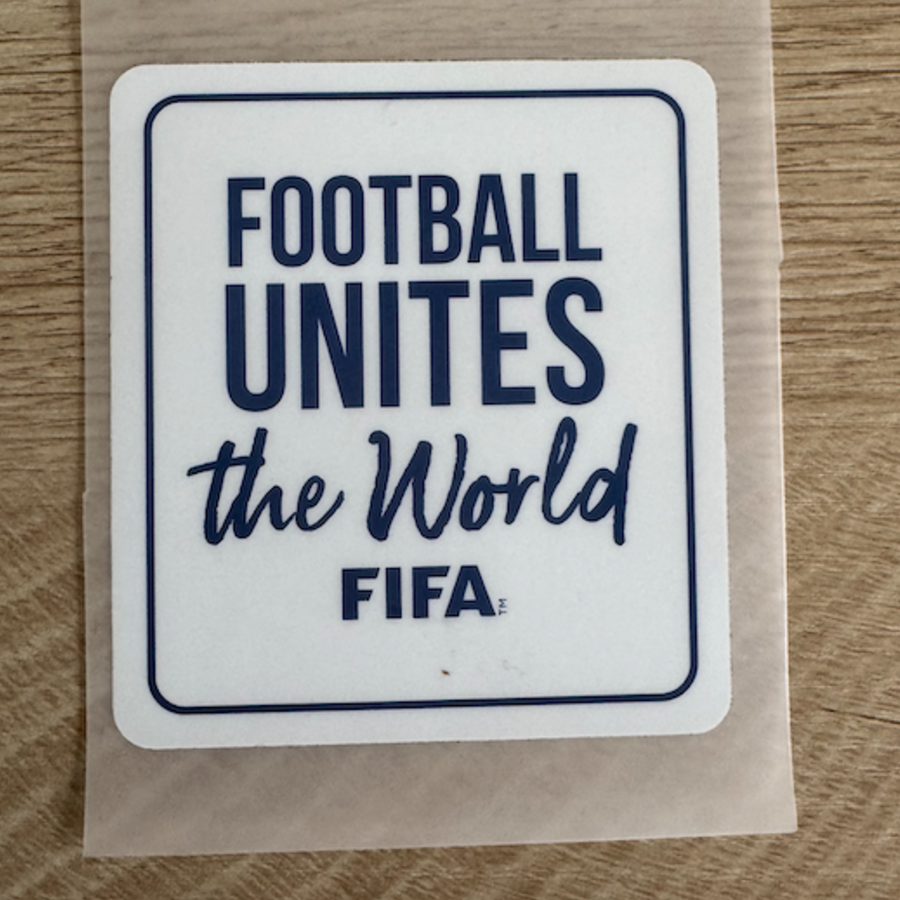
Across the 2026 World Cup, the left-sleeve patches cover three campaign messages: Unite for Peace, Football Unites the World, and Unite for Education. Here's how they map to the stages.
Group Stage
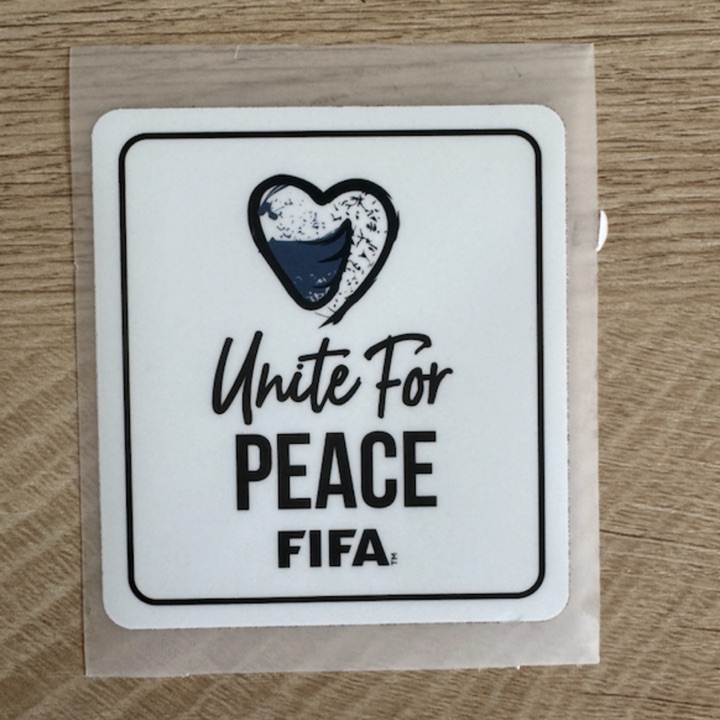
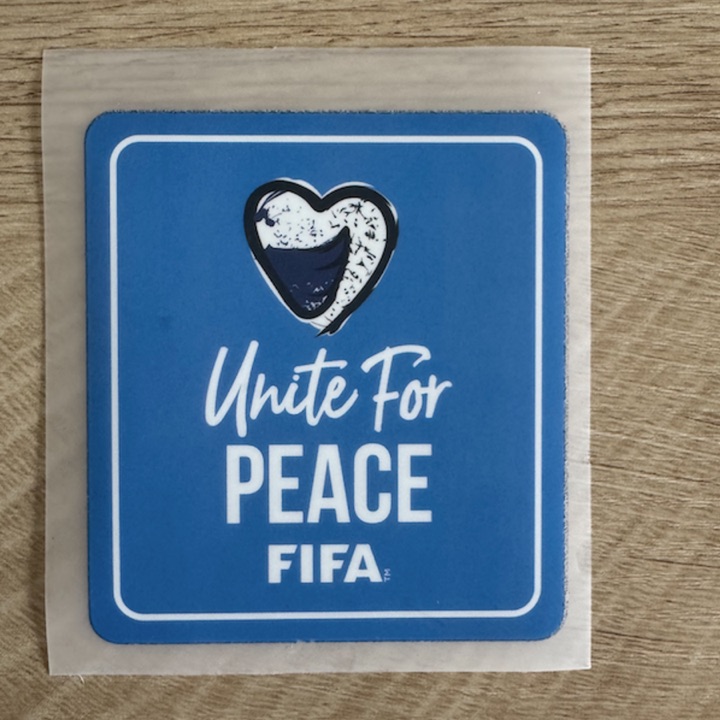
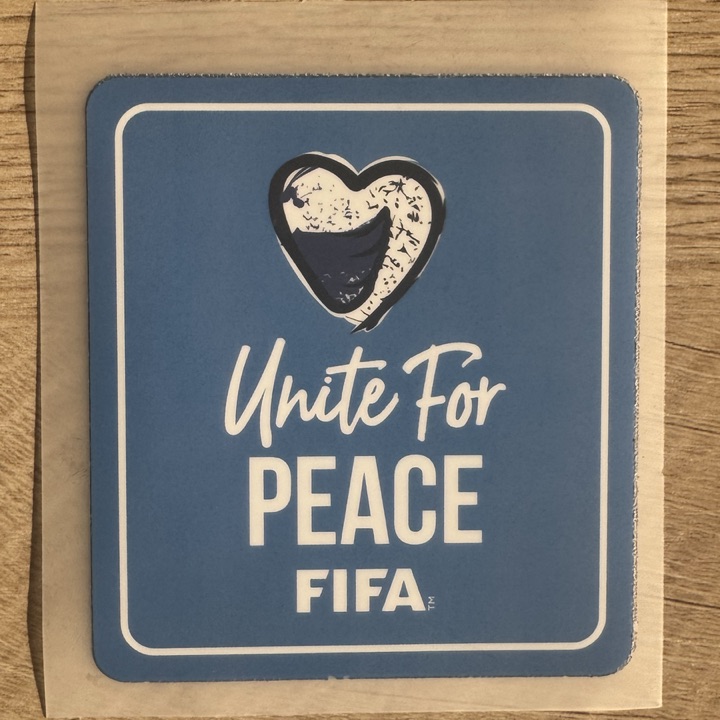
- Matchday 1 → "Unite for Peace," White. The opener. This is the patch on every shirt in the first round of group games. Confirmed.
- Matchday 2 → "Unite for Peace," Blue. Same campaign, second colorway, for the second round of group matches. Confirmed.
- Matchday 3 → "Unite for Peace," color to be confirmed. The third group matchday carries another Unite for Peace patch, but FIFA hasn't published this round's exact colorway yet, so we won't state a color as fact.
Knockouts
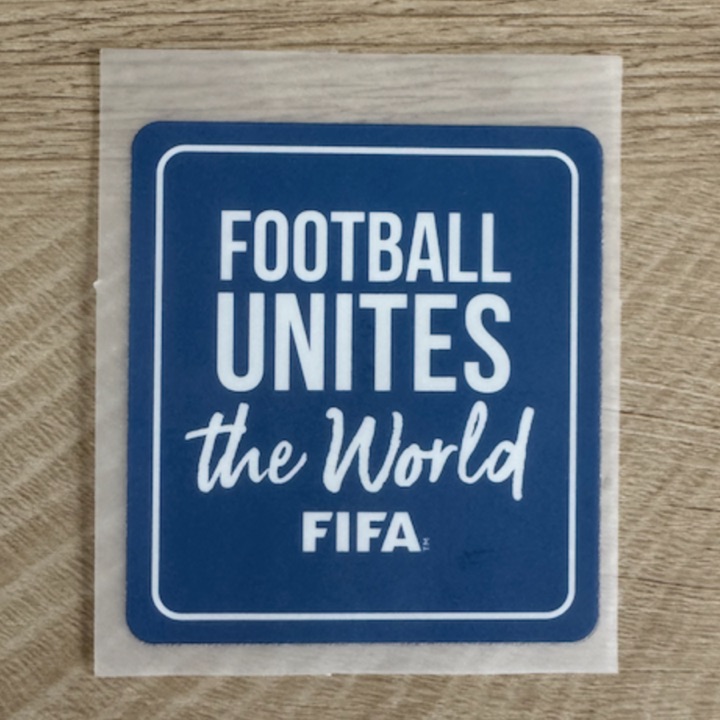
- Round of 32 → "Football Unites the World." The first knockout round of a 48-team World Cup is a Round of 32 — new for this tournament. The campaign switches to Football Unites the World here. The exact colorway isn't public yet, so treat any specific shade as unconfirmed for now.
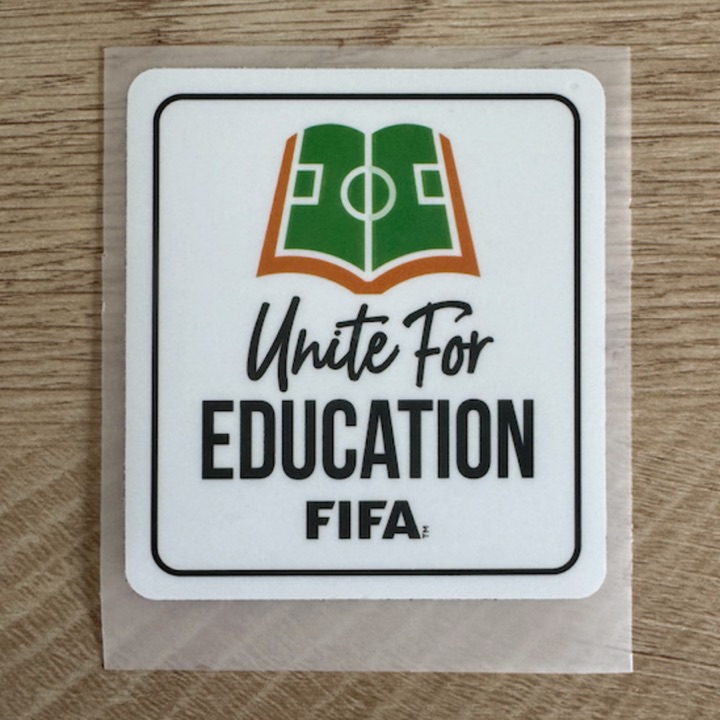
- Round of 16 → "Unite for Education," White. The campaign shifts to Unite for Education, in white. Confirmed.
- Quarter-final → "Unite for Education," Navy. Same campaign, deeper into the bracket, in navy — and to be clear, that's navy, not black. Confirmed.
- Semi-final → "Unite for Education," Purple. The penultimate round, in purple. Confirmed.
- Final → "Football Unites the World." The showpiece returns to the Football Unites the World message. FIFA hasn't published the final's exact colorway yet, so we're not stating one.
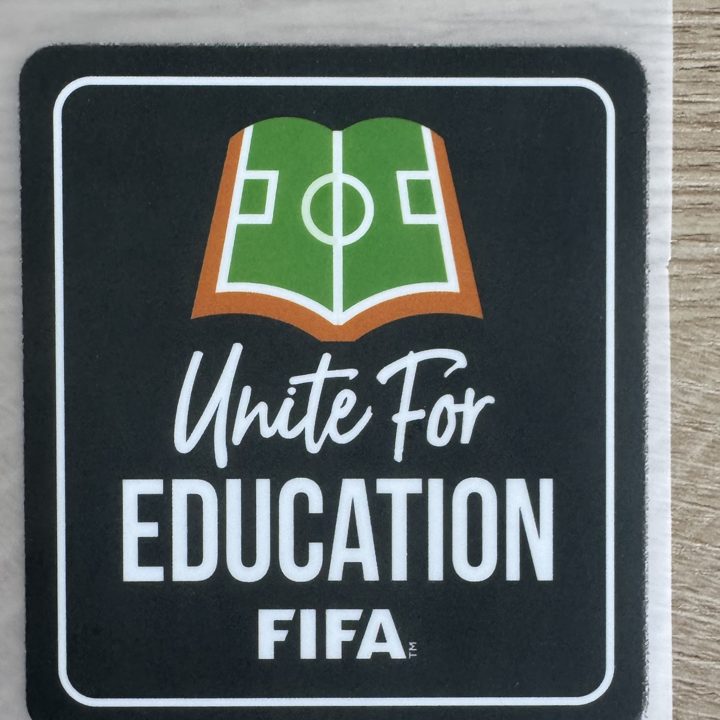
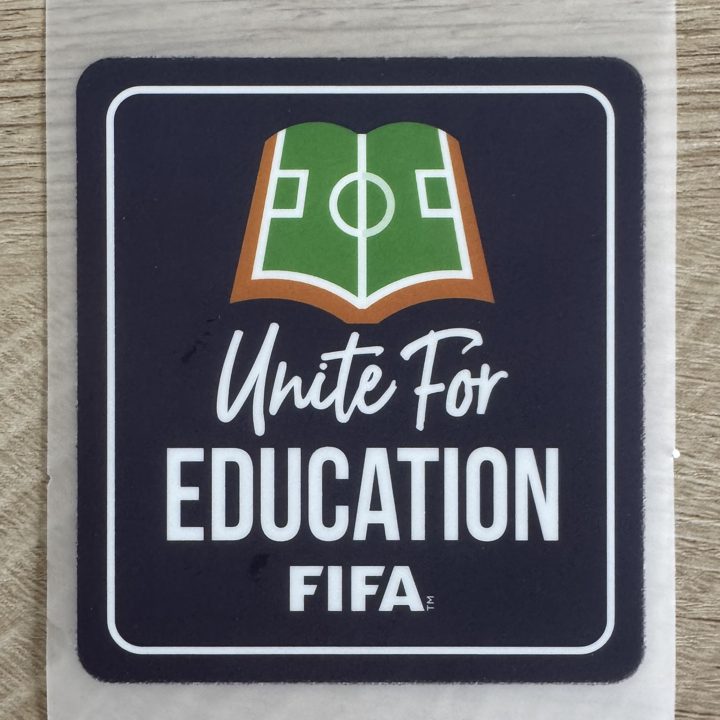
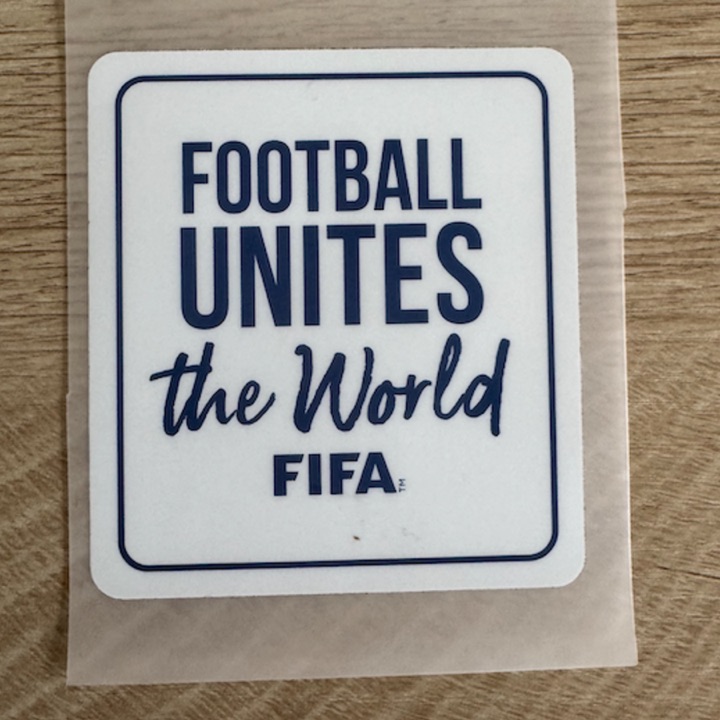
That's the full ladder: three group-stage Unite for Peace patches, then a swing through Football Unites the World, Unite for Education, and back to Football Unites the World for the final.
For a deeper look at each stage's patch — including which colorways are locked and which are still pending — see our left-sleeve round-by-round guide.
The Three Causes Behind the Patches
The left-sleeve patches aren't just decoration. Each one carries a FIFA social-campaign message, and there are three across the tournament. Here's the quick context on each.
Unite for Peace
This is the group-stage message. It appears across all three group matchdays (white, then blue, then a third colorway that's still to be confirmed). It's the patch most fans will see most often, simply because the group stage has the most matches — 48 teams means a lot of opening-round shirts carrying the Unite for Peace badge.
Football Unites the World
This campaign bookends the knockouts in an interesting way. It appears at the Round of 32 — the very first knockout round — and then returns for the Final. It's a fitting frame: the message that opens the elimination phase is the same one stitched onto the shirts lifted (or lost) on the last day.
Unite for Education
This is the deep-run campaign, covering the heart of the knockout bracket: Round of 16 (white), Quarter-final (navy), and Semi-final (purple). If you see a team wearing one of these three colorways, you know they made it at least to the last 16 — which is part of why these patches carry real collector weight. The navy quarter-final patch in particular is one to get exactly right, since it's easy to mistake for black.
How to Apply Sleeve Patches
These are heat-press patches (heat-applied), which is the standard for collector jersey patches. They bond with controlled heat and firm, even pressure — so you'll want a heat press, or a jersey-customization shop that has one. A household iron can't hold a flat temperature or apply even pressure, so we don't recommend it. The process is quick, but a few details matter on a thin, performance-fabric shirt.
- Position first, no heat. Lay the shirt flat and place the patch on the sleeve exactly where it belongs — right-sleeve badge on the right, round patch on the left, clear carrier film facing up. Use a real match photo as a reference for height and angle. Don't eyeball it; once it's pressed, it's down.
- Protect the fabric. Put a Teflon or parchment sheet between the platen and the patch. World Cup jerseys are made of thin synthetic material that can scorch or shine under direct heat.
- Press with heat and firm pressure. Set the press to roughly 300–320°F (150–160°C) with medium-firm pressure for about 12–15 seconds — follow the card included with your patch if it differs.
- Peel the carrier film. Let the patch cool for a few seconds, then slowly peel the clear plastic film off the front, just like any heat-press patch. Re-press the edges briefly through the sheet to lock them down.
- Let it cool completely before moving or wearing the shirt. The bond finishes setting as it cools.
- Wash it inside out, cold. Turn the shirt inside out and wash cold to keep the patch looking sharp wear after wear.
Where to Buy
Every patch is sold individually, so you pick exactly the ones your shirt needs:
- The tournament badge (right sleeve). The everyday "make my shirt look like a World Cup shirt" pick — gold for former champions, black or white for everyone else.
- The round patch for your stage (left sleeve). Add the badge for whichever round you're recreating — the live knockout patch, or the group-stage Unite for Peace.
- Several at once. Building a full sleeve or following your team through the bracket? Add each round patch you want and the volume discount kicks in automatically — 2+, 4+, 6+. You get the same matched look without paying marketplace prices one patch at a time.
For most people building one accurate kit, that's the tournament badge plus the round patch for the stage you're commemorating — then add more as your team advances.
FAQ
What is the gold patch on some World Cup 2026 jerseys?
The gold version of the right-sleeve tournament emblem (the "26" badge) is worn only by former World Cup champions who qualified for 2026 — Brazil, Germany, Argentina, France, England, Spain, and Uruguay. Every other team wears the standard black or white version of the same emblem. Gold signals previous champion status; it's not available to teams that have never won, and Italy doesn't have one because it didn't qualify for 2026.
Why do the two sleeves on a World Cup 2026 jersey have different patches?
The right sleeve carries the fixed tournament emblem, which stays the same for a team in every match. The left sleeve carries a rotating "round" patch that changes by stage and carries a social-campaign message (Unite for Peace, Football Unites the World, or Unite for Education). So a shirt's left-sleeve patch tells you which stage the match was — group, knockout, semi-final, and so on — while the right tells you the team.
What does the left-sleeve patch change to in each round?
In the group stage it's Unite for Peace (white on Matchday 1, blue on Matchday 2, and a third colorway FIFA hasn't published yet for Matchday 3). The Round of 32 switches to Football Unites the World. Round of 16 is Unite for Education in white, the quarter-final is Unite for Education in navy, and the semi-final is Unite for Education in purple. The final returns to Football Unites the World, with its exact colorway not yet public.
How do I put a patch on my jersey?
These are heat-press patches, so you'll need a heat press (or a jersey-customization shop) — a household iron won't give an even, lasting bond. Position the patch with the clear film facing up, lay a Teflon or parchment sheet over it to protect the fabric, and press at roughly 300–320°F (150–160°C) with firm pressure for about 12–15 seconds. Let it cool a few seconds, peel the clear carrier film, re-press the edges, and let it cool fully.
Patch by round
Patch guides
How to Add the World Champions Badge to a Spain Jersey: Placement and Iron-On Guide
world cup 2026 patch by roundWorld Cup 2026 Patch by Round: Which Sleeve Badge for Every Stage
world cup champions gold patch 2026Gold vs Standard: What Your Team's World Cup 2026 Sleeve Badge Color Means
usa mexico canada world cup patch setUSA, Mexico & Canada World Cup 2026 Patches: The Host-Nation Set
how long will spain wear the world champions badgeHow Long Will Spain Wear the World Champions Badge? Until the 2030 Final
how to apply world cup patch heat pressHow to Apply a World Cup 2026 Sleeve Patch (Heat-Press Guide)
what patch round of 16 world cup 2026Round of 16 World Cup 2026 Patch: Unite for Education (White)
what patch round of 32 world cupRound of 32 World Cup 2026 Patch: Football Unites the World
unite for peace patchUnite for Peace Patch: The World Cup 2026 Group Stage Sleeve Badge
world champions badge spainWhat Is the Gold Badge on Spain's Shirt? The World Champions Badge, Explained
world cup final 2026 jersey printingHow to Add the 2026 Final Match Details to a Spain or Argentina Jersey
world cup 2026 final patchWorld Cup 2026 Final Patch: What the Champions Wear (July 19)
football unites the world patchFootball Unites the World Patch: Round of 32 & the Final
match details transferWhat Is a Match Details Transfer? The Small Print That Marks a Final Shirt
world cup 2026 sleeve patch qualityHow to Spot a Well-Made World Cup 2026 Sleeve Patch (Quality Guide)
quarter final world cup patch 2026Quarter-final & Semi-final World Cup 2026 Patches: Navy & Purple
spain jersey badges meaningEvery Badge on the Spain World Champions Shirt, Decoded
unite for education patchUnite for Education Patch: Round of 16, Quarter-final & Semi-final
where to buy world cup 2026 sleeve patchWhere to Buy World Cup 2026 Patches & What's a Fair Price (US Shipping)
spain 2026 winners jerseySpain Winners Jersey vs. Adding the Badge: The $100 Question
What patch does your team wear?
Not sure where to start? Use the World Cup 2026 Patch Finder to see your team's sleeve patches, or read how to apply a World Cup patch with a heat press.
World Cup 2026 patches: FAQ
What sleeve patches are worn at the 2026 World Cup?
Every team wears two sleeve patches. The right sleeve carries the tournament badge — gold for the seven former World Cup champions, black or white for everyone else. The left sleeve carries the round patch, which changes as the tournament advances.
Which teams wear the gold World Cup badge?
The seven former World Cup champions in the field: Argentina, Brazil, England, France, Germany, Spain and Uruguay. They wear the gold tournament badge; every other team wears the standard black or white badge.
How many round patches are there at the 2026 World Cup?
Eight — one per stage from Matchday 1 through the Final, across the Unite for Peace, Football Unites the World and Unite for Education campaigns.
Do World Cup patches need to be sewn on?
No. These are heat-press patches. You press them onto the sleeve with firm, even heat, let them cool, then peel the carrier film. No sewing required.
Build your World Cup 2026 sleeve
Patch FC sells heat-press patches for personal jersey customization. Ships from the USA.