How to Spot a Well-Made World Cup 2026 Sleeve Patch (Quality Guide)
By Patch FC Editorial Team · Last updated 2026-06-25 · Sources: FIFA, Footy Headlines, nss-sports
If you've shopped for a World Cup 2026 sleeve patch, you've probably noticed the same thing we did: the listings are a mess. The same photo gets reused across a dozen sellers, and the patch you actually receive can range from beautifully made to genuinely terrible. This guide cuts through it. We'll show you exactly what separates a quality patch from junk — the materials, the construction, the color details — so you can buy the right one with confidence.
Where quality actually lives
Two patches can look identical in a listing photo and feel completely different in your hand. The gap shows up in materials and construction, not the headline on the listing. Here's what to actually look at.
Color accuracy is the first tell
The fastest way to judge a patch is whether the colors are right for the stage.
- The quarter-final "Unite for Education" patch is navy — it should read navy, not black. Cheap versions get this wrong constantly.
- The group-stage blue should match the confirmed Matchday 2 shade.
- Several stages — Matchday 3, the Round of 32, and the Final — haven't had their exact colorways published yet. Anyone listing those as fact is guessing. Where a color isn't public, the honest move is to say so rather than invent one.
Get the color wrong and the patch looks off on the sleeve no matter how clean the stitching is.
Embroidery vs sublimation
Modern tournament patches use a mix of techniques, and knowing the difference helps you judge what you're looking at. Embroidered elements give you raised thread and a tactile, premium feel — great for borders and lettering, but limited on fine gradients. Sublimated (printed) elements handle complex color blends and tiny details that thread can't, and the round designs lean on this heavily. Neither is "better" by default; quality is about execution. Sharp registration, no bleeding between colors, and crisp edges matter more than the method.
A cheap patch betrays itself here: fuzzy lettering, colors that blur into each other, a "26" that looks slightly off because the proportions drifted.
The edge
Run your eye around the border. A quality patch has a clean merrowed edge — that tight, rolled stitch perimeter — or a precise laser/heat-cut edge that won't fray. Lower-quality patches show loose threads, uneven borders, or a cut that's already peeling back at the corners before you've even applied it.
The backing
This is the make-or-break for actually using the patch. A good patch comes with a proper heat-transfer backing that bonds to the shirt under a heat press, with a clean adhesive film. A poor one has a flimsy, uneven, or already-dried backing that won't hold — you'll press it on, wear the shirt twice, and watch a corner lift. If you plan to apply the patch yourself, backing quality is the single most important thing to check — and remember these need a heat press, not a household iron.
Get the right patch, not just a good-looking one
A well-made patch is still the wrong buy if it's the wrong design. Two things to verify:
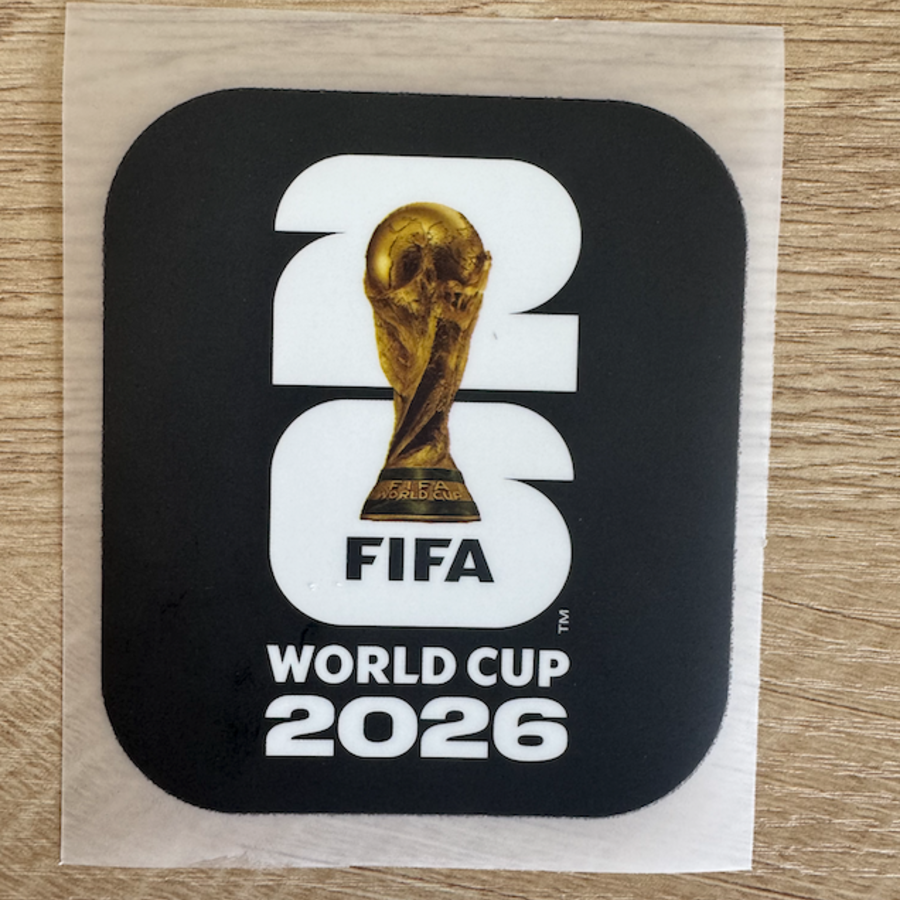
The tournament badge colorway. The gold "26" badge belongs only to the seven former World Cup champions in the field — Brazil, Germany, Argentina, France, England, Spain, and Uruguay. Every other nation wears the black or white version. A gold badge listed for a team that's never won is wrong on its face.
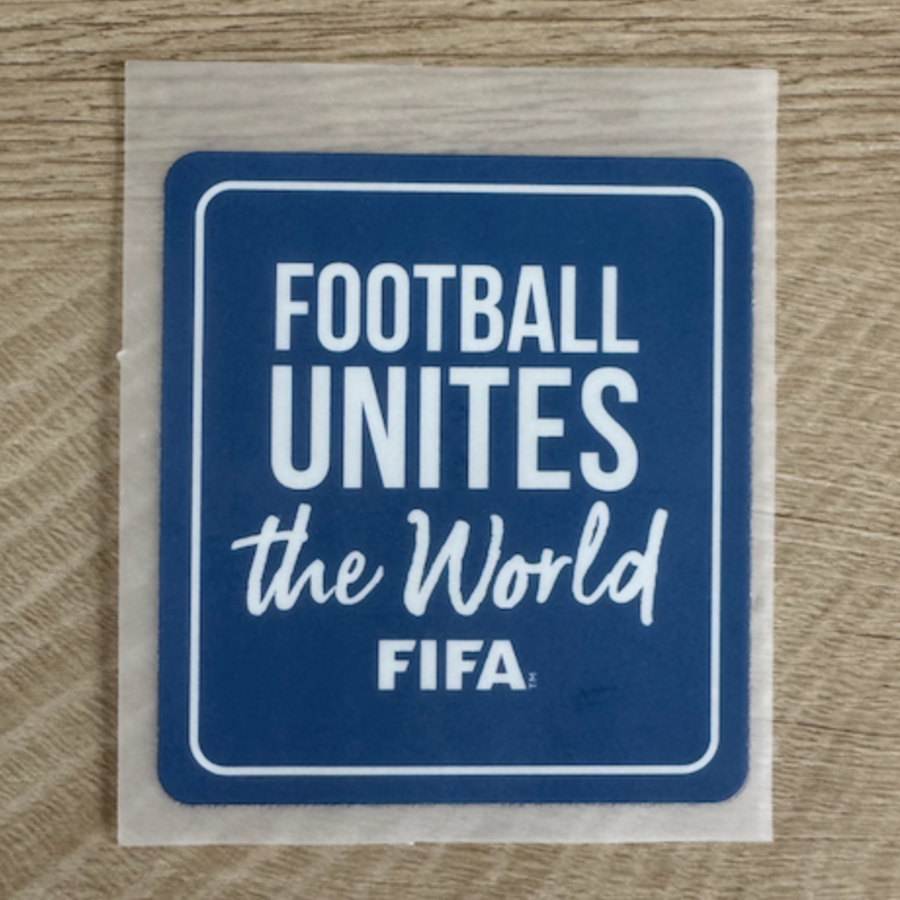
The round design matches the stage. The left-sleeve patch rotates: white "Unite for Peace" for Matchday 1, blue for Matchday 2, navy "Unite for Education" for the quarter-final, purple for the semi. If a "quarter-final" patch is black instead of navy, whoever made it didn't track the product.
A few more ways to filter out the bad ones before you buy:
- Zoom in on the photo. Blurry, heavily filtered, or obviously borrowed stock images are hiding something. A seller proud of their patch shows it sharp and close up, edge included.
- Be skeptical of confident colors that aren't public. Matchday 3, the Round of 32, and the Final haven't been published. Anyone stating them as fact is guessing.
- Match the patch to the shirt era. A 2026 World Cup patch belongs on a 2026 national-team shirt — make sure you're getting the 2026 tournament design, not a recycled graphic.
So which should you buy?
For almost everyone, the right call is a well-made patch with the correct colorways and a backing that actually holds. That gives you the on-pitch look, the correct stage rotation, and a patch that survives a wash. We track the real colorways stage by stage, flag the ones that haven't been published yet, and build to match the on-pitch designs as closely as possible.
FAQ
What separates a quality World Cup 2026 patch from a cheap one?
Materials and construction. A quality patch has accurate stage colors (navy quarter-final, not black), clean dense embroidery or sharp sublimation, a tidy merrowed or laser-cut edge that won't fray, and a proper heat-transfer backing that bonds under a heat press. Cheap ones blur the colors, fray at the edge, and peel because the backing won't hold.
Which teams wear the gold tournament badge?
Only the seven former World Cup champions competing in 2026: Brazil, Germany, Argentina, France, England, Spain, and Uruguay. Every other nation wears the black or white version. Light-vs-dark within those is a contrast choice for the shirt and can differ between home and away kits — but contrast never moves a team into or out of gold. Italy has won before but didn't qualify, so there's no Italy gold badge in this tournament.
Why is the quarter-final patch navy and not black?
Because that's the confirmed colorway: the quarter-final "Unite for Education" patch is navy, per public sources. It's a common mistake to assume it's black, and it's a quick way to spot a seller who hasn't actually checked the product. Several other stage colors — Matchday 3, Round of 32, and the Final — haven't been published yet, so anyone stating those as fact is guessing.
How do I make sure the patch will actually stay on my shirt?
Check the backing before you buy. A quality patch uses a proper heat-transfer adhesive that bonds when heat-pressed correctly. The cheap ones fail here — the corners lift after a wear or two. Backing quality matters more than almost anything else if you're applying the patch yourself, so prioritize it over a slightly lower price — and plan on a heat press, since a household iron won't give an even bond.
Wondering about a specific nation? See what patch your team wears at the 2026 World Cup, or find your team’s patches in the Patch Finder.
Get the patches
Keep reading
What Is the Gold Badge on Spain's Shirt? The World Champions Badge, Explained
world cup 2026 patch by roundWorld Cup 2026 Patch by Round: Which Sleeve Badge for Every Stage
how to apply world cup patch heat pressHow to Apply a World Cup 2026 Sleeve Patch (Heat-Press Guide)
where to buy world cup 2026 sleeve patchWhere to Buy World Cup 2026 Patches & What's a Fair Price (US Shipping)
Patch FC sells heat-press patches for personal jersey customization. Ships from the USA.