Where to Buy World Cup 2026 Patches & What's a Fair Price (US Shipping)
By Patch FC Editorial Team · Last updated 2026-06-25 · Sources: FIFA, Footy Headlines, nss-sports
The group stage is wrapping up and the knockouts are starting, which is exactly when demand for World Cup 2026 sleeve patches spikes and prices get weird. This guide breaks down where to actually buy them, what counts as a fair price, and what to expect on US shipping and returns so you don't overpay or get stuck with the wrong patch.
Where to buy World Cup 2026 patches
There are really only three places these patches come from, and each has tradeoffs. What matters is simple: is it accurate, priced fairly, and shipped fast?
General marketplaces (eBay, Etsy, AliExpress)
This is where most people start because it's where Google sends them.
The good: huge selection, lots of sellers, buyer-protection policies if a transaction goes sideways. You can usually find any single patch you want.
The catch: quality and accuracy are a coin flip. The same listing photo gets reused by a dozen sellers, the patch you receive may not match it, and embroidery detail varies wildly between batches. On AliExpress specifically, you're also looking at multi-week shipping from overseas and customs uncertainty. Returns exist on paper but are slow and often not worth the hassle for a $4 item.
Marketplaces are fine if you want one patch, you're patient, and you've read recent reviews on that exact seller. They're frustrating if you want several patches that all look like they came from the same place.
Local sports shops and pop-ups
Some brick-and-mortar sports and soccer shops carry sleeve patches, especially in cities with big football communities. You get to inspect the patch in person and walk out with it the same day.
The catch: selection is thin and tournament-specific stock is hit or miss. Most shops carry the generic round patch or the tournament badge and not the full rotation. Pricing is also inconsistent — you might pay a premium for the convenience.
A dedicated patch shop
A shop that focuses on World Cup 2026 patches specifically tends to win on the two things that actually matter: accuracy and consistency. Because the whole catalog is one tournament, the round patches are mapped to the correct stage, the tournament badge colorways are right, and a set you order actually matches.
The good: correct stage-to-patch mapping, consistent embroidery across the set, faster domestic shipping, and a return policy written for US buyers instead of a generic marketplace template.
The catch: smaller catalog by design — you're buying World Cup patches, not every patch ever made. For this tournament, that focus is the feature, not a limitation.
What's a fair World Cup 2026 patch price
Here's the part that saves you money. There's no set "MSRP" for these patches — pricing is all over the place, and some marketplace sellers bank on you not knowing the range.
Single patches
A fair price for a single sleeve patch — whether it's the tournament badge or one of the round patches — lands in the $4 to $8 range delivered. That covers the patch and standard domestic shipping.
- Under $4: usually means overseas shipping (long wait), thin embroidery, or a too-good-to-be-true listing.
- $8 to $19: this is the marketplace markup zone. eBay and Etsy resellers routinely list common patches at this price because casual buyers don't know better. You are paying a convenience and search-visibility tax, not for better quality.
- Over $19 for a single common patch: walk away. Nothing about a single sleeve patch justifies that.
Buying several patches
Wanting more than one patch is where a dedicated shop pulls clearly ahead of piecing it together on a marketplace. Instead of chasing eight separate listings at $8 to $19 each — that's $64 to $150, with mismatched embroidery and separate shipping — you buy the individual patches you want from one shop, matched, shipped together, with a volume discount that stacks as you add more (2+, 4+, 6+):
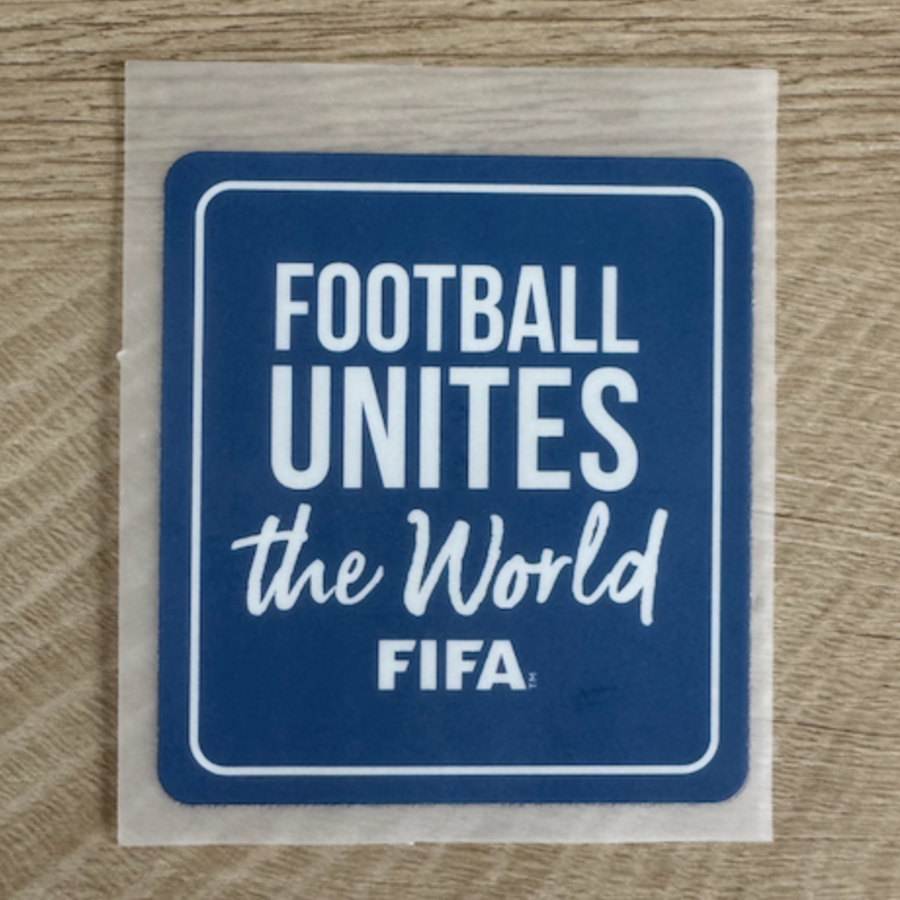
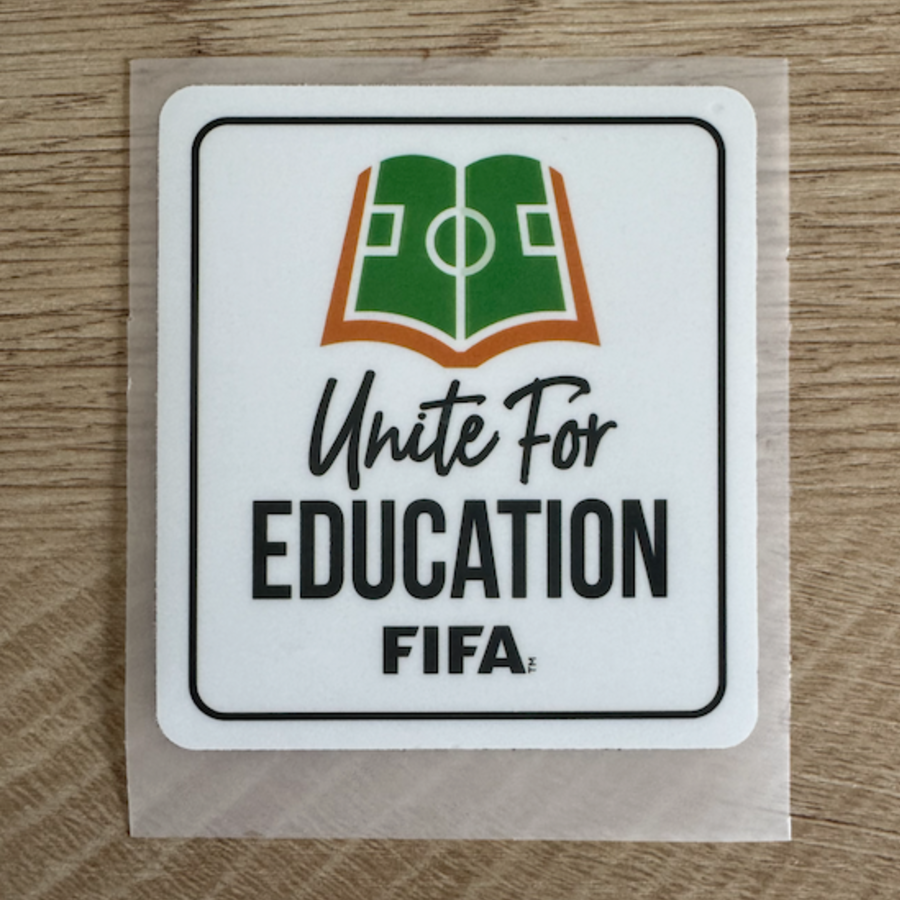
- The full left-sleeve rotation: the group-stage Unite for Peace patches plus the knockout Unite for Education and Football Unites the World patches — added individually as you collect them.
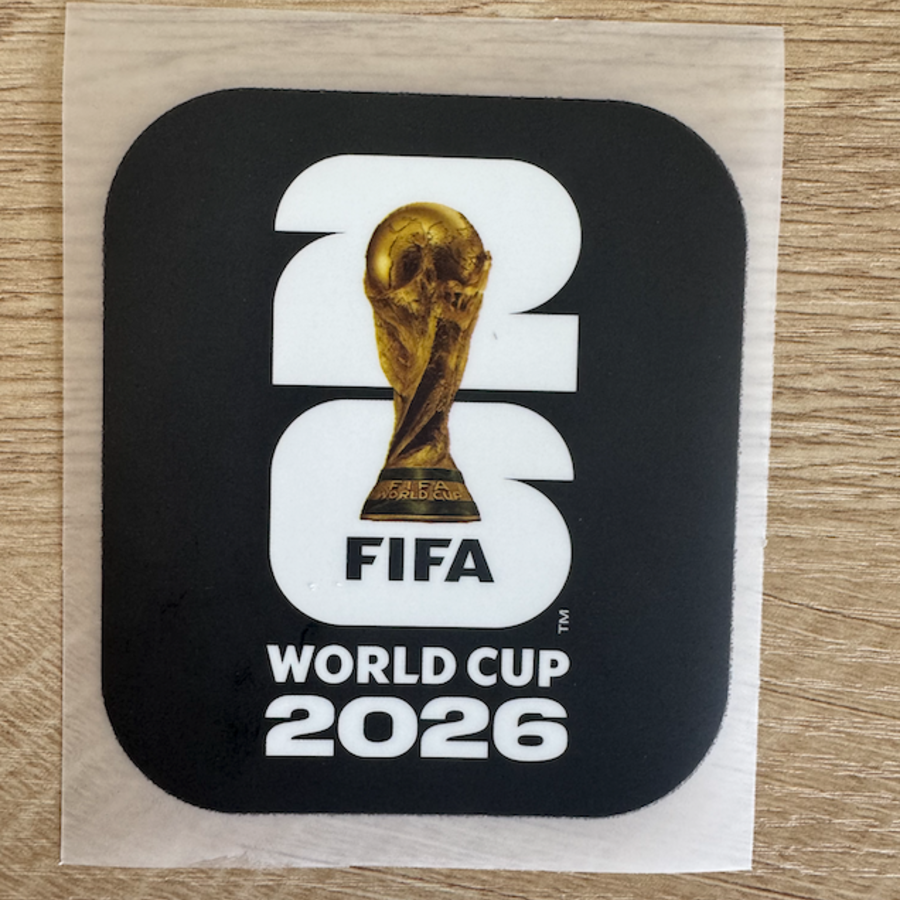
- Tournament badge + the rounds you want: the right-sleeve badge plus whichever round patches match the stages you're recreating.
The math is simple: buying matched patches from one shop with the volume discount beats piecing the same patches together one at a time on a marketplace — and everything arrives together and looks consistent.
What to know before you buy: get the right patch
A fair price on the wrong patch is still a waste. Two quick rules.
The tournament badge (the "26" emblem)
The gold tournament badge is worn only by the seven nations in the field that have previously won the World Cup: Brazil, Germany, Argentina, France, England, Spain, and Uruguay. Every other nation wears the black or white version. Within a team, the light-vs-dark choice is just for kit contrast — a light badge on a dark shirt, a dark badge on a light shirt — and it can differ between a team's home and away kit. Contrast never bumps a team into or out of gold. So if you support a non-champion nation, don't buy the gold badge expecting it to be "correct."
The round patch rotates by stage
The left-sleeve patch changes as the tournament progresses:
- Group Stage Matchday 1: Unite for Peace — White
- Group Stage Matchday 2: Unite for Peace — Blue
- Round of 16: Unite for Education — White
- Quarter-final: Unite for Education — Navy
- Semi-final: Unite for Education — Purple
A few stages — Group Matchday 3, the Round of 32, and the Final — rotate to specific patches, but FIFA hasn't published those exact colorways yet, so be wary of any seller claiming certainty on them. With the knockouts starting now, the Unite for Education patches are the ones in demand. Make sure the listing matches the stage you actually want.
US shipping and returns: what good looks like
For US buyers, shipping and returns are where marketplaces quietly cost you.
Shipping speed. Domestic fulfillment should land in a few business days. If a listing's delivery estimate is two-plus weeks, it's almost certainly shipping from overseas — fine if you're not in a rush, painful if you want the patch for a match this weekend during the knockouts.
Shipping cost. On a $4 to $8 patch, shipping shouldn't double your total. Watch for marketplace sellers who list a cheap patch and recover their margin with inflated shipping. Always judge on the delivered price.
Returns. A dedicated shop should have a clear, US-friendly return window for a wrong or defective item. Marketplace returns technically exist, but for a low-cost patch the time and shipping cost usually make them not worth filing — which is exactly why accuracy at purchase matters more here than in most categories.
Bottom line for US buyers: for one obscure single patch you can't find elsewhere, a marketplace is fine — just check the delivered price and recent seller reviews. For several matched patches, the tournament badge, or anything you want fast and correct, a dedicated World Cup 2026 patch shop is the better call on price, speed, and getting the right patch the first time.
FAQ
How much should a World Cup 2026 sleeve patch cost?
A fair delivered price for a single patch is about $4 to $8. Marketplace resellers often list common patches at $8 to $19, which is a convenience and visibility markup, not a sign of higher quality. Anything over roughly $19 for a single common patch is overpriced.
Should I buy one patch or several?
If you only want one specific patch, buy the single. If you want several — the full round rotation, or the tournament badge plus the rounds — add them individually and the volume discount (2+, 4+, 6+) makes it cheaper per patch than buying one at a time on a marketplace, with everything arriving together.
How long does US shipping take?
From a domestic seller or a dedicated shop, expect a few business days. Delivery estimates of two or more weeks usually mean the patch is shipping from overseas, which also adds customs uncertainty. With the knockouts underway, check the delivery date before ordering if you need it soon.
Which tournament badge does my team wear — gold or standard?
Only the seven former champions in the field — Brazil, Germany, Argentina, France, England, Spain, and Uruguay — wear the gold "26" tournament badge. Everyone else wears the black or white version. The light-vs-dark choice within a team is just for kit contrast and can differ between home and away kits.
Wondering about a specific nation? See what patch your team wears at the 2026 World Cup, or find your team’s patches in the Patch Finder.
Get the patches
Keep reading
What Is the Gold Badge on Spain's Shirt? The World Champions Badge, Explained
world cup 2026 patch by roundWorld Cup 2026 Patch by Round: Which Sleeve Badge for Every Stage
how to apply world cup patch heat pressHow to Apply a World Cup 2026 Sleeve Patch (Heat-Press Guide)
world cup champions gold patch 2026Gold vs Standard: What Your Team's World Cup 2026 Sleeve Badge Color Means
Patch FC sells heat-press patches for personal jersey customization. Ships from the USA.