Gold vs Standard: What Your Team's World Cup 2026 Sleeve Badge Color Means
By Patch FC Editorial Team · Last updated 2026-06-25 · Sources: FIFA, Footy Headlines, nss-sports
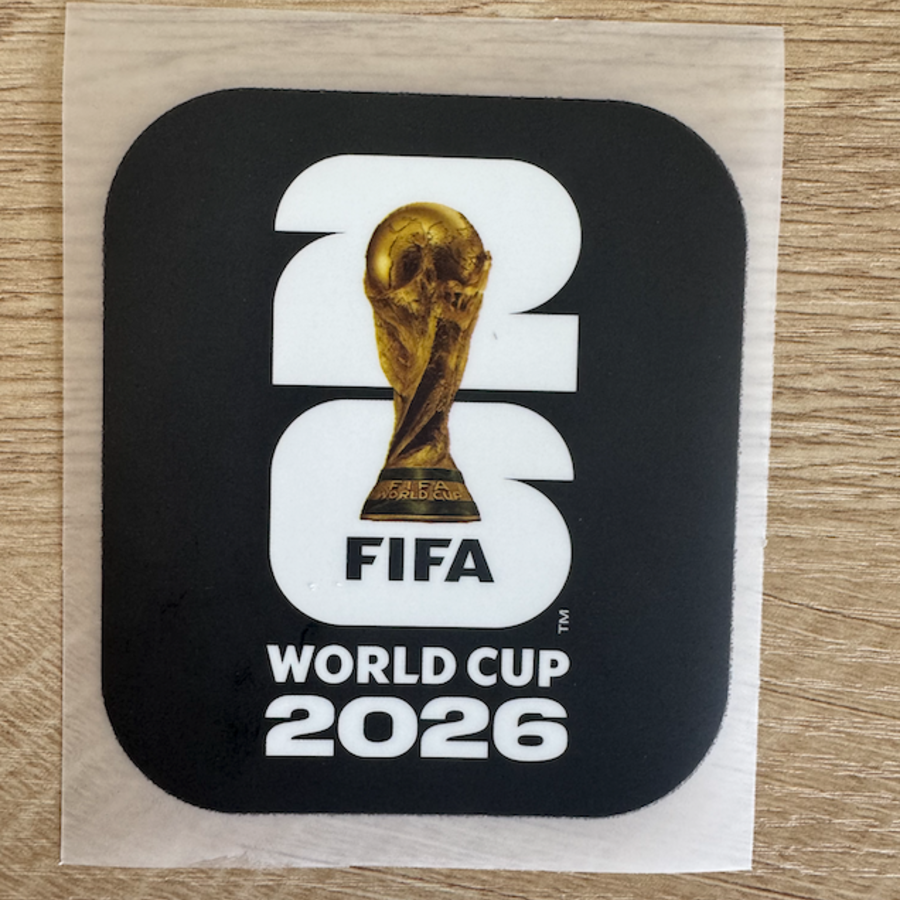
If you've been staring at two jerseys wondering why one has a gold "26" badge on the right sleeve and the other has black, you're not imagining it. The color isn't random, and it isn't a print error. It's a status marker, and only seven teams in the entire 2026 tournament are allowed to wear the gold one.
The gold badge is a former-champions badge
Here's the rule that resolves all the confusion at once: the gold tournament badge is worn only by nations that have previously won the World Cup and qualified for 2026. Everyone else wears the standard version in black or white.
This is the single most misunderstood detail of the entire 2026 patch lineup. People assume gold means "premium" or "the nicer-looking one," so they want it on whatever team they support. But gold is a heritage signal, not a quality tier. If your team has never lifted the trophy, its players are not wearing gold this summer — no matter how good the squad is.
Think of it the way club teams wear a star or a special crest for past titles. The gold "26" emblem on the right sleeve is FIFA's way of marking the established royalty of the tournament. It's a quiet flex, and once you know to look for it, you'll spot it instantly on broadcasts.
The 7 teams that wear gold at World Cup 2026
Exactly seven nations qualified for 2026 with a World Cup title already in the cabinet. These are the only teams wearing the gold sleeve badge:
- Brazil — five-time champions, the most decorated nation in the tournament
- Germany — four titles (including the West Germany era)
- Argentina — three titles, the reigning 2022 champions
- Italy — four titles
- France — two titles
- England — one title (1966)
- Uruguay — two titles, including the very first World Cup in 1930
- Spain — one title (2010)
Count those and you'll notice that's eight names. Read the next section, because there's a catch that trips up almost everyone.
Wait — what about Italy?
Italy has won the World Cup four times, which absolutely qualifies them for the gold badge on paper. But Italy did not qualify for the 2026 tournament. They aren't in the field, so there is no Italy kit and no Italy gold badge to be found this summer.
That's the trap. When fans list "former champions," they instinctively include Italy because of the history. But the gold badge only applies to former champions who are actually playing in 2026. With Italy out, the real list of gold-wearing teams on the pitch is seven:
- Brazil
- Germany
- Argentina
- France
- England
- Uruguay
- Spain
That's the canonical seven. If a listing, reseller, or social post tries to sell you an "Italy 2026 gold badge kit," that combination doesn't exist in the tournament — be skeptical.
Brazil and the gold badge: the most-searched case
Brazil draws more of these questions than any other team, so it's worth being explicit: yes, Brazil wears the gold tournament badge at World Cup 2026. As five-time champions — more than any other nation — Brazil is the clearest, most obvious member of the gold club.
So if you're shopping a Brazil 2026 shirt and the right-sleeve "26" emblem is black or white, that's a mismatch worth questioning. The correct Brazil look pairs the famous yellow shirt with a gold sleeve badge. The same logic applies to Argentina's sky-blue-and-white, Germany's white, France's blue, and the rest of the seven — gold is part of their correct 2026 presentation.
The kit-contrast nuance (this is where people get it wrong)
Now the detail that creates 90% of the remaining confusion. The standard badge — the one worn by the other 41 nations that aren't former champions — comes in two colorways: black and white. And which one a team uses can even change between its home and away kit.
Why two colors for the same badge? Contrast. It's purely a visual-legibility choice:
- A dark (black) badge goes on a light-colored shirt so it stands out.
- A light (white) badge goes on a dark-colored shirt so it stays visible.
So a team might wear the black version on its white home kit and the white version on its dark away kit. Same team, same status, two different badge colors across two jerseys. Nothing about their standing changed — only the shirt color did.
Contrast never moves a team between gold and standard
This is the line to remember: contrast operates only inside the standard (non-champion) family. It's the black-vs-white decision. It never, ever bumps a team up to gold or pulls a champion down to standard.
In other words:
- A non-champion will never wear gold just because gold would "contrast nicely." They get black or white, full stop.
- A former champion stays gold regardless of whether they're in a light or dark kit. The gold doesn't switch to black on their away shirt.
So when you see two versions of the same non-champion team's jersey with different sleeve badge colors, that's the contrast rule doing its job — not a promotion or a downgrade. And when you see Brazil in gold on both home and away, that's the champion rule overriding contrast entirely.
How to read any 2026 jersey in five seconds
Put it all together and you've got a quick mental checklist for the right sleeve:
- Is the badge gold? Then the team is one of the seven former champions: Brazil, Germany, Argentina, France, England, Uruguay, or Spain. No exceptions.
- Is the badge black or white? Then the team is one of the other 41 nations, and the specific color is just a contrast choice for that particular shirt.
- Different badge color on home vs away? Normal — that's contrast at work, and it only ever happens within the standard family.
That's the whole system. One color carries heritage, the other two carry legibility, and they never cross over.
A note on these badges
They let collectors and fans match the on-pitch look of their favorite team's jersey. This is simply a guide to what the colors mean and which teams correctly wear which version, drawing on reporting from FIFA, Footy Headlines, and nss-sports.
FAQ
Which teams wear the gold patch at the 2026 World Cup?
Seven nations: Brazil, Germany, Argentina, France, England, Uruguay, and Spain. These are the former World Cup champions who qualified for 2026. Every other team in the field wears the standard badge in black or white.
Does Brazil wear the gold sleeve badge?
Yes. Brazil are five-time World Cup winners — the most decorated nation in the tournament — so they wear the gold tournament badge on the right sleeve. If a Brazil 2026 shirt shows a black or white sleeve badge, the combination is incorrect.
Why isn't Italy on the gold list if they've won the World Cup?
Italy have won four titles, but they did not qualify for the 2026 World Cup. Because they aren't in the tournament, there's no Italy kit and no Italy gold badge this summer. The gold badge only applies to former champions who are actually playing in 2026.
Why do some teams have a black badge and others a white one?
Both are the same standard (non-champion) badge — the color is chosen for contrast. A dark badge sits on a light shirt and a light badge sits on a dark shirt, so the emblem stays visible. That's why a single team can wear black on its home kit and white on its away kit.
Can the contrast rule turn a standard badge gold?
No. Contrast only decides between black and white within the non-champion family. It never promotes a team to gold or changes a former champion's gold badge to black. Gold is reserved strictly for the seven qualified former champions, regardless of kit color.
Wondering about a specific nation? See what patch your team wears at the 2026 World Cup, or find your team’s patches in the Patch Finder.
Get the patches
Keep reading
What Is the Gold Badge on Spain's Shirt? The World Champions Badge, Explained
world cup 2026 patch by roundWorld Cup 2026 Patch by Round: Which Sleeve Badge for Every Stage
how to apply world cup patch heat pressHow to Apply a World Cup 2026 Sleeve Patch (Heat-Press Guide)
where to buy world cup 2026 sleeve patchWhere to Buy World Cup 2026 Patches & What's a Fair Price (US Shipping)
Patch FC sells heat-press patches for personal jersey customization. Ships from the USA.