Unite for Peace Patch: The World Cup 2026 Group Stage Sleeve Badge
By Patch FC Editorial Team · Last updated 2026-07-02 · Sources: FIFA, Footy Headlines, nss-sports
If you've watched a single group-stage match at the 2026 World Cup, you've already seen it: a small circular badge on the left sleeve reading Unite for Peace. It's the patch that defines the whole group stage — worn across all three matchdays, just in a different color each time.
What the Unite for Peace patch means
The Unite for Peace badge is a cause patch: a social-message emblem that sits on the left sleeve of every team's shirt during the group stage. Where the right-sleeve tournament badge tells you the competition (the "26" emblem) and a team's pedigree, the left-sleeve patch carries a rotating message tied to the stage of the tournament.
For the group phase, that message is peace. The wording is deliberately simple and universal — a call to set rivalry aside on the biggest stage in the sport. It's the same idea behind the broader "Football Unites the World" family of messaging that runs through the knockout rounds, but the group stage gets its own dedicated phrase and its own three-color sequence.
A few things worth knowing up front:
- It appears on every team, not just a select group. The right-sleeve gold tournament badge is reserved for former World Cup champions, but the Unite for Peace patch is universal.
- It's on the left sleeve. The right sleeve carries the "26" tournament badge.
- It changes color by matchday, not by team. So two teams facing each other on the same day wear the same colorway.
Group stage match patch: World Cup 2026 colorways
Here's where it gets fun for collectors. The Unite for Peace patch isn't a single design — it rotates through three colorways as the group stage progresses. Think of it as a mini three-part set within the larger badge story.
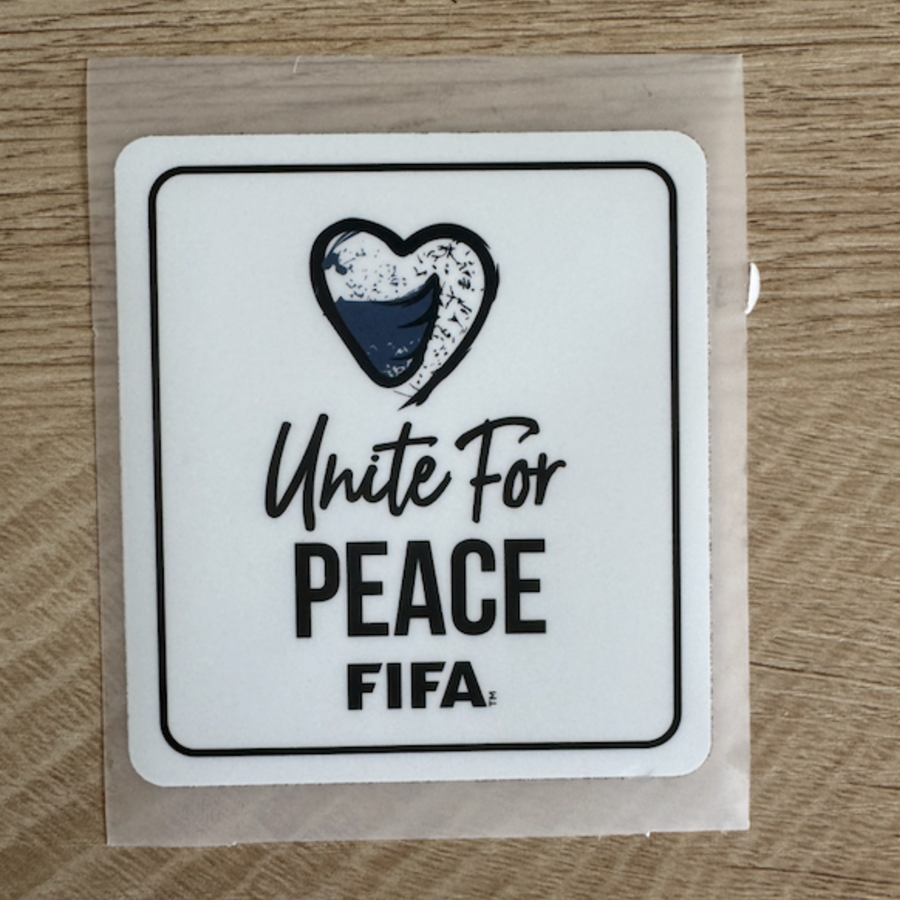
Matchday 1 — White (confirmed)
The opening round of group games uses the white Unite for Peace badge. This is the version most fans saw first, splashed across the tournament's opening fixtures. If you want the patch that represents the very start of the World Cup, this is it — the white colorway is the matchday-one badge.
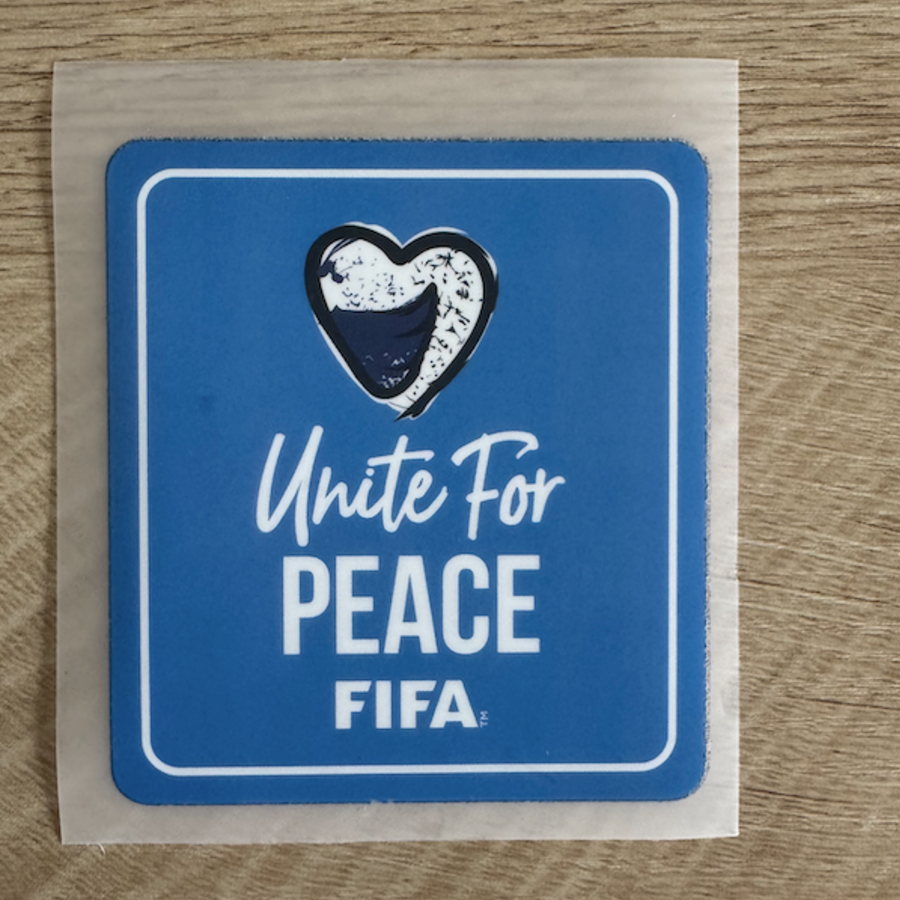
Matchday 2 — Blue (confirmed)
For the second round of group games, the patch switches to blue. Same wording, same circular shape, new color. The blue version is the mid-group badge — the one teams wore as the standings started to take shape and qualification math kicked in.
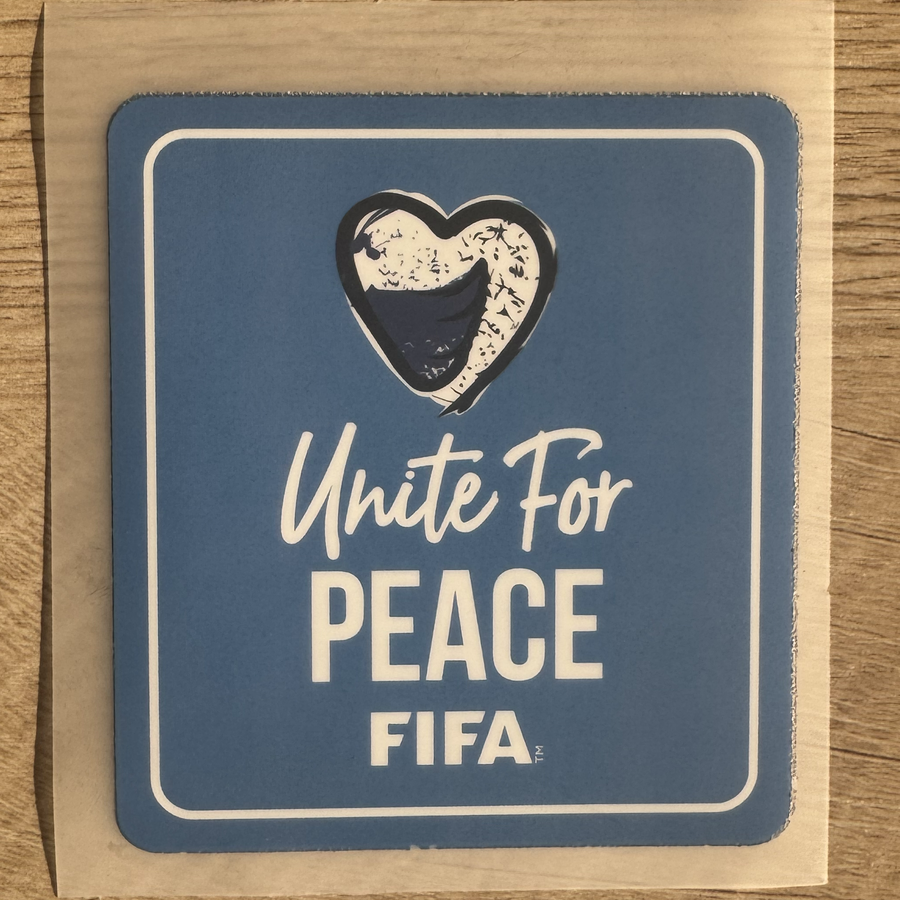
Matchday 3 — Steel blue (confirmed)
The third and final group matchday completes the trio with a steel blue version — white print and the heart mark on a darker steel base, worn for the deciding group games. With white, then blue, then steel blue, the full group-stage set is now accounted for: three distinct colorways, one for each matchday that settles who advances.
That three-step rhythm — white, then blue, then steel blue — is what makes the group stage visually distinct from the knockout rounds, where the messaging shifts to Unite for Education (Round of 16 through the semi-final) and back to Football Unites the World for the Round of 32 and the final.
Where the tournament stands right now
The group stage is complete. The final round of group games wrapped on June 27, which means all three Unite for Peace colorways — white, royal blue, and steel blue — have now been worn in matches that are already in the books. These aren't upcoming designs anymore; they're collector items tied to games that actually happened, from the opening whistle to the last night of group play.
The tournament has moved on to the knockouts: the Round of 32 (June 28 – July 3) wears the royal-blue Football Unites the World patch, the Round of 16 (July 4–7) switches to the white Unite for Education version, and the road runs through the quarter-finals (July 9–11) and semi-finals (July 14–15) to the final on July 19 at MetLife Stadium. But the group-stage chapter is closed — and a closed set is exactly what collectors look for.
Why the patches rotate at all
If you're new to this, the rotating-patch system can feel like a lot to track. The logic is actually clean once you see it:
- The right sleeve stays put. The "26" tournament badge — gold for former champions, black or white for everyone else (chosen for kit contrast) — doesn't change as the tournament goes on.
- The left sleeve tells the story of the stage. It moves from peace (group stage) to education (Round of 16 to semi-final) with the unity message bookending the knockouts. Each stage gets its own phrase and its own colorway.
For a collector, that turns the left sleeve into a timeline. Line up the patches in order and you can read the entire path of the tournament — from the first group-stage whistle to the final — just by the badges. The Unite for Peace trio is the opening chapter of that timeline.
Which Unite for Peace patch should you get?
It depends on what you're after.
If you want the iconic one, go with the Matchday 1 white version. It's the badge of the opening games — the moment the World Cup kicks off — and it's the most recognizable of the group-stage trio. It's the natural pick for a single shirt build representing the start of the tournament.
If you're building the full picture, add the round patches stage by stage. Unite for Peace is only the group stage; the knockout rounds carry their own emblems (Football Unites the World for the Round of 32, Unite for Education through the semis, and a final-match badge). Buy the ones you want individually — and because the volume discount (2+, 4+, 6+) applies when you add several, you can collect the whole road to the final without paying marketplace prices one patch at a time.
How to apply it
The Unite for Peace patch goes on the left sleeve, mirroring how it's worn on the pitch — opposite the right-sleeve tournament badge. These are heat-press patches, so apply it with a heat press (or have a jersey shop do it) and add a few stitches around the edge if you want a permanent hold — a household iron won't give an even bond. If you're matching a specific matchday, just remember the rule: white for the opener, blue for the middle round, and steel blue for the deciding group games.
FAQ
What does the Unite for Peace patch mean?
It's the World Cup 2026 group-stage cause badge worn on the left sleeve. The wording carries a universal message of peace, in line with FIFA's broader "Football Unites the World" theme. It appears on every team during the group phase and rotates color by matchday.
What color is the Unite for Peace patch for each matchday?
Matchday 1 uses the white version, Matchday 2 uses the blue version, and Matchday 3 uses a steel blue version — three distinct colorways, one per matchday.
Is the Unite for Peace patch worn by every team?
Yes. Unlike the right-sleeve tournament badge — where the gold version is reserved for former World Cup champions — the left-sleeve Unite for Peace patch is worn by all 48 teams throughout the group stage. Two teams facing each other on the same matchday wear the same colorway.
Which sleeve does the Unite for Peace patch go on?
The left sleeve. The right sleeve carries the "26" tournament badge, and the left sleeve carries the rotating cause patch — Unite for Peace in the group stage, then Unite for Education and Football Unites the World through the knockouts.
Should I buy the matchday patches separately or several at once?
If you only want the opening-game look, the Matchday 1 white patch is the standout single. If you want the full tournament story — group stage through the final — add each matchday and knockout patch individually; the volume discount (2+, 4+, 6+) kicks in as you collect, so buying several at once stays cheaper than piecing them together elsewhere.
Wondering about a specific nation? See what patch your team wears at the 2026 World Cup, or find your team’s patches in the Patch Finder.
Get the patches
Keep reading
What Is the Gold Badge on Spain's Shirt? The World Champions Badge, Explained
world cup 2026 patch by roundWorld Cup 2026 Patch by Round: Which Sleeve Badge for Every Stage
how to apply world cup patch heat pressHow to Apply a World Cup 2026 Sleeve Patch (Heat-Press Guide)
where to buy world cup 2026 sleeve patchWhere to Buy World Cup 2026 Patches & What's a Fair Price (US Shipping)
Patch FC sells heat-press patches for personal jersey customization. Ships from the USA.