What the Champions League Starball Patch Means (and Why Some Have a Number)
By Patch FC Editorial Team · Last updated 2026-08-26 · Sources: UEFA, Footy Headlines, Football Shirt Collective
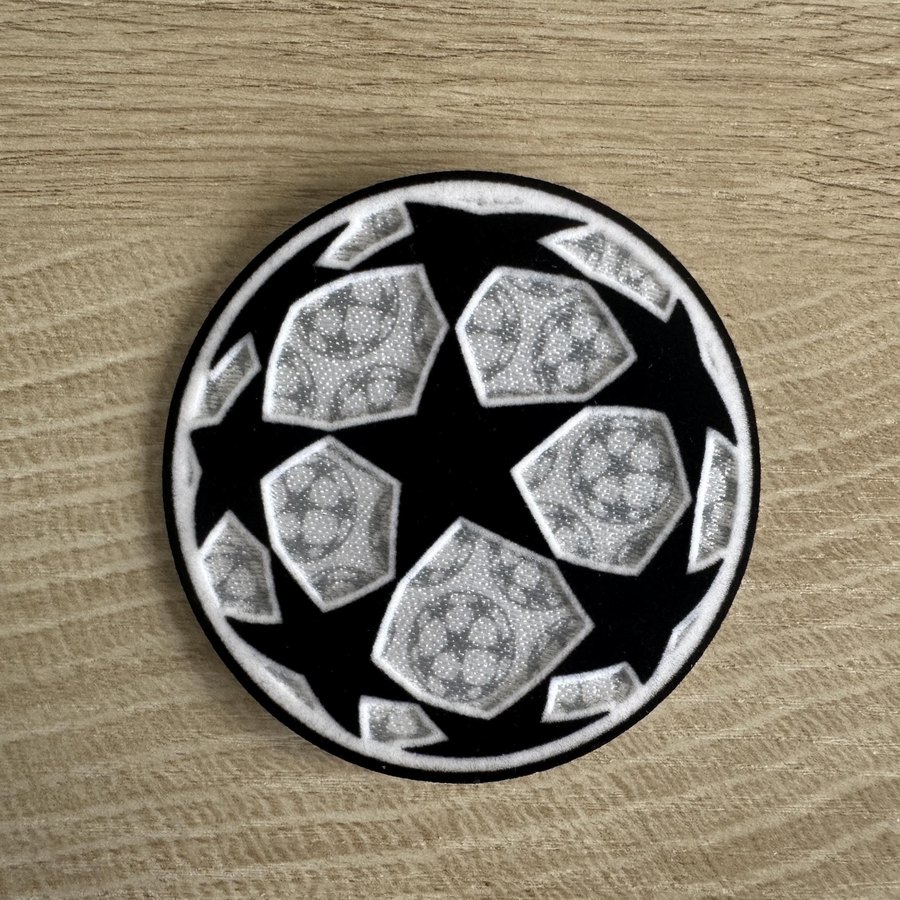
The round patch of stars on the sleeve of a Champions League shirt is called the starball: a group of stars arranged so that, together, they form the shape of a ball. It's the emblem of Europe's top club competition, and wearing it on the sleeve means exactly one thing — this club is playing in the Champions League. For most of the field, that's the entire meaning. The complication, and the reason this question gets searched so much, is that a few clubs wear the starball with a number in the middle. The plain version is worn. The numbered version is earned. This guide covers both.
The rule that explains every starball
If you remember one line from this page, make it this one: the starball says a club is in the competition; the number inside says what that club has done in it.
Everything else about the patch follows from that split. The starball itself carries no ranking, no seeding, no hierarchy — it's the mark of presence, identical for a debutant and for the most decorated club in the tournament's history. The number is a different kind of statement entirely: a title count, displayed only by clubs that crossed a specific line in the record books. Two layers of meaning, one patch.
Why is it called a starball?
The name is literal. Look closely at the emblem and you'll see the design's quiet trick: the stars don't orbit a ball or decorate one — arranged edge to edge, the stars are the ball. That star-built sphere is the visual identity of the whole competition, and the sleeve patch is that emblem rendered as a roundel roughly 76 mm across.
Because the design belongs to the competition rather than to any club, the starball is club-neutral by nature. There is no Liverpool starball or Juventus starball — there is one starball, and whichever shirt it sits on, it says the same thing.
What does wearing the starball on a sleeve mean?
A football shirt has a geography. The chest belongs to the club — crest, colors, identity. The sleeve is where a competition announces itself. When a club is in the Champions League, the starball goes on the sleeve; when it isn't, the sleeve goes without. That's the entire contract.
This is why the patch reads as a status object even though it ranks nobody. Being in the competition at all is the achievement the starball marks — a club has to earn its place there every season, and the sleeve says so for as long as the campaign lasts. The opposite sleeve, for completeness, carries the rectangular UEFA Foundation bar — a separate patch with a separate job, worth its own read.
What does the number inside the starball mean?
Now the part that turns casual viewers into people typing questions into search bars. Some clubs' starballs have a number sitting in the middle of the stars, and that number is governed by a UEFA distinction called the badge of honour.
The threshold is precise: a club earns the right to display its European title count inside the starball by winning the competition five times in total, or three times in a row. Cross either line and the number is yours permanently; fall short of both and your starball stays plain, no matter how large the club or how strong the current squad.
The list of clubs that have earned it is short enough to memorize:
- Real Madrid — the record holder, with a 15 inside the starball
- Milan — in through five or more titles
- Bayern — in through five or more titles
- Liverpool — in through five or more titles
- Barcelona — in through five titles, exactly at the threshold
- Ajax — in through three consecutive wins
Six clubs. Every other side in the competition — dozens of them, every season — wears the starball with nothing inside. Each number belongs to one club's shirt and no other: why Madrid's sleeve reads 15 and Barcelona's reads 5, and what every club wears in 2026-27, are stories for their own guides — this page stays on what the patch itself means.
The trap: the numbered starball is not a premium version
Here's the misunderstanding this page exists to correct. Seeing the plain starball and the numbered one side by side, most people assume they're looking at a product line: standard and deluxe, base model and upgrade. They're not.
The number is not a trim level. It's a right. A club puts a number inside its starball because it won the European Cup five times, or three times running — a distinction settled on the pitch across decades, closed to everyone else at any price. The plain starball isn't the budget option; it's the version the overwhelming majority of clubs wear because it's the only version they're entitled to.
Read it this way: a numbered starball makes a claim about a club's record. Put a number on a sleeve whose club never earned it, and the shirt is stating something false — which any collector, and most match-going fans, will read instantly. The plain starball makes no claim beyond presence, which is exactly why it's correct on almost every shirt in the competition.
Has the number always been inside the starball?
No, and this is where older articles trip people up. For years, the badge of honour was a separate patch, worn on the other sleeve from the starball. Since the 2021-22 redesign, that layout is gone: the title count moved inside the starball itself, one patch on the right sleeve with the number built into the middle.
So if you've seen photos of a shirt with the starball on one arm and a numbered badge on the other, you were looking at the old system. On a current shirt, starball and number are a single patch — and explainers written before the redesign describe a layout that no longer exists.
A note on this patch
The starball in this line is the plain version — no number inside, which is precisely what makes it fit any club's shirt in the competition. It's a flock-finish patch, 76 mm across, with an iron-on backing made for a heat press; for application, follow the instructions included with the patch. This guide draws on reporting from UEFA, Footy Headlines and Football Shirt Collective.
FAQ
What does the Champions League starball patch mean?
The starball — stars arranged to form the shape of a ball — is the emblem of Europe's top club competition, and wearing it on the sleeve means the club is playing in the Champions League. A number inside it adds a second meaning: that club's European title count, displayed under UEFA's badge of honour rules.
What is the UEFA badge of honour?
It's the distinction that lets a club display its title count inside the starball. The threshold is five total European titles or three consecutive ones — cross either line and the number is earned permanently.
Which clubs wear a number inside the starball?
Six: Real Madrid, Milan, Bayern, Liverpool and Barcelona through five or more titles, and Ajax through three consecutive wins. Every other club in the competition wears the plain starball.
Is the starball with a number better than the plain one?
No. The number is an earned record, not a quality tier — both versions are the same patch apart from the count inside. For any club outside the six-name list, the plain starball is the correct look, because it's the one the players themselves wear.
Which sleeve does the starball go on?
The right sleeve. Since the 2021-22 redesign, a badge-of-honour club's title count sits inside the starball on that same sleeve, as a single patch. The left sleeve carries the rectangular UEFA Foundation bar instead.
Get the patches
Keep reading
Argentina After the Final: Completing the 19 July Shirt
uefa badge of honour barcelonaBarcelona's 5: How a Club Earns UEFA's Badge of Honour
barcelona jersey patchesBarcelona 2026-27: Every Patch and Nameset for Your Shirt
champions league patches 2026-27Every Champions League Sleeve Patch for 2026-27, Club by Club
Patch FC sells heat-press patches for personal jersey customization. Ships from the USA.